Showing posts with label NYC. Show all posts

Sunday, April 3, 2011

Me Versus The Truman Application

I have not posted anything since July. Not because I was lazy or have given up on the blogosphere but because I have working on the Truman application all this time. The Truman Scholarship is for students who have demonstrated leadership abilities and are pursuing a career in public service. The application included a series of mini essay, which could have been blog posts themselves. I was selected to be a finalist but did not win the competition. It was heartbreaking to not win something you worked almost a year on but I learned a lot from the process. Here is a glimpse of the most nerve-racking part of the process: the interview.

I left my house at 6AM to commute to my interview location, the Roosevelt House in the Upper East Side. On my way to the subway station, I picked up a copy of the New York Times, to scan the day's headlines (a step up from the free Metro's I usually get). Even though I reached my destination fairly early, I was not the first person there (Truman finalists are usually overachievers). As the finalists trickled in, everyone talked about how nervous they were and shared horror stories they have heard. When the panelists came into the room at 9AM, everyone introduced themselves formally. The lead panelist gave an anecdote of each finalist's hometown and institution, easing the tension in the room. From there, the interviews quickly began with the students from Rhode Island going first.

The rest of the finalists were left in an auditorium and we were each interviewed one by one. My interview group included 10 New York candidates and 3 Rhode Island candidates. They were a supportive group, as everyone encouraged each other throughout the day and applauded as each of us finished. Everyone was willing to share their interview after they were finished. Other than discussing Truman related items, our conversations were lively, ranging from public workers’ unions to reality TV shows. The foundation would tell you that you will form strong relationships with the finalists and that was true. As one finalist described it, we were "hot messes" stuck in a room together for 7 hours.

I was 8th to go out of the 13 candidates. Initially, I imagined the room to be a big conference table where I would had to sit in the “hot-seat” at the end of the table. Instead it was a much more closed setting, where everyone was sitting at a standard table. Although I liked the intimate setting, it was difficult for me to make eye-contact with everyone when I addressed the questions. There was also a glass of water ready for you and I finished it before the interview ended. My questions ranged from my policy proposal to my interests to my background. I would list more specific questions but no two interviews are the same. Other finalists were asked more off-beat questions such as what three books would you purchased with a credit card or a question tying in President Truman.

I thought my interview was fine but I knew my greatest challenge was that I was not able to answer questions promptly enough. A question would be asked with two additional follow-up questions from the same person. That threw me off because I would be too focused on formulating a response to the first one. The interview is a test of how you respond under pressure. Although I typically respond well to pressure, I was a bit thrown off because I never faced an interview like this before.

And now some advice to potential candidates:

  • Read your application before the interview. Put yourself in the position of the panelists and think of questions they would ask you. Your application is the only material they have on you.
  • Read newspaper headlines. I read the NY Times before going into the interview and one of my questions was in a reference to an article in that morning’s edition.
  • You are the expert on your application so trust yourself. Your panelists probably know less about your topic so be confident in your responses.
  • Have fun! The process is more of a dialogue than an interview. 

Wednesday, July 21, 2010

An Homage to the Lower East Side

I spent my afternoon in the Lower East Side (LES) today, something I have rarely done since high school. Thus said, it is interesting to see how much this neighborhood, my childhood home, has changed over the past few years. To me, LES is a haven for people who are seeking opportunity, something that is becoming increasingly less evident each day.

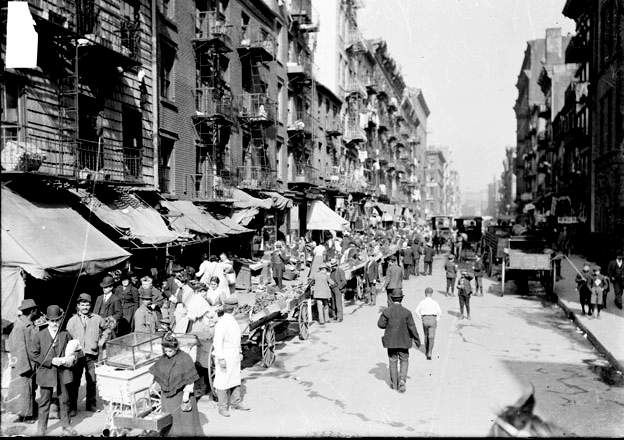
LES is one of the oldest neighborhoods in NYC and has always been the first settlement for new immigrants. The Dutch arrived during the 17th century and populated the area with farms. It eventually became a battleground with the British, creating the heart of New York. Every new wave of immigrants came to LES. In the 1800's, the Irish settled in the neighborhood's tenement homes as they fled from the potato famine. This was followed by the Italians and Germans and it was the beginning of what America should be: an ethnically diverse community. During the early 1900's, Jewish immigrants moved in, contributing delicatessens, staples to NYC. New groups moved in rapidly during the last half of the century. Blacks and Hispanics began to inhabit the area with the rise of low-income project homes in the sixties. Chinese began moving in during the seventies because of its close proximity to Chinatown. Lastly, squatters lived in vacant buildings in the eighties, which became the root of the punk rock scene.

LES has always been a rough neighborhood. Each ethnic group that lived in LES were shunned from the societal majority in some way. Thus, they have all lived in poor conditions. Every group, from the Irish and Italians to the Hispanics and Chinese have brought large families to live in the cramped conditions of tenement homes, despite inhabiting the space a century apart. Crime rates were always up no matter what decade you were in. As a child living there in the nineties, I was always told to avoid certain parts and to take precaution while playing in the parks. It was because of all this that each wave of immigrants worked hard to move out. Despite the numerous groups mentioned before, they never lived harmoniously for it became a trend for one group to move out their predecessor to move in.

Today, people are not working hard to move out but to move in. At the turn of the century, LES has become a budding hipster scene for its ghetto aesthetics. Tenement homes have been reconstructed into upscale apartments and old factory buildings have become lofts and art galleries. It is sad because you do not get as much street cred when you say you're from LES as you did twenty years ago. Yet, LES still remains to be the home for people seeking opportunity for the young people that are beginning to move in are too seeking possibilities.

Sunday, May 30, 2010

Buildings, Cities, and the People

On Thursday night, I went to a community meeting at a Carroll Gardens' daycare for my internship to discuss the facility's closure. Present were representatives from ACS (Administration for Children's Services) and 30+ angry parents. Now, you would be upset if your child's daycare was closing down and the nearest affordable one is 5 miles away. There are many daycares in the neighborhood but many of them are out of their price range. This is one of many results of the changing socioeconomic statuses in NYC neighborhoods and across the country. This phenomenon of gentrification has both its positive and negative effects.

Carroll Gardens, like much of North Brooklyn, is facing rapid development. New boutiques and trendy restaurants are opening everyday. The neighborhood's primary residential buildings are brownstones and project housing, leading to cultural clashes between yuppies and the ghetto. Within a block, I was able to find an upscale sushi restaurant and a Crown Fried Chicken. As you can imagine, the individuals who are the most upset about these developments are the ones losing their neighborhood. The same thing is happening to Bed-Stuy, Harlem, and somewhat in my own neighborhood of Coney Island, where I can see this firsthand. There are continuous debates in the community between the developers who want to build condos and resorts and residents who have sentimental attachments to the neighborhood. However, a new resort will bring more job opportunities to a fairly poor neighborhood and thus stimulating the economy. Are emotional values small prices to pay for opportunities that will benefit in the long run?

What upsets individuals even more is that new developments are by private entities and it feels personal that an autonomous group is taking something they believe to be accessible to the public. This is where much of the angst against private corporations are rooted. If this is viewed on a broader scale, the government does not have a lot of money and thus power compared to corporations. Thus, the possibility of have private space is greater than that of public space.

The demographics of neighborhoods have changed greatly between decades and centuries and development has always coexisted with it. Before project housings were built in Bed Stuy, there was a large Jewish community who all lived in brownstone house. There is no stopping the changes created by individuals and time, so development will always exist.

Tuesday, March 16, 2010

Beware the Ides of March

Unless you go to one of few select universities, March is the longest month for many people, with no breaks or long weekends. Thus, the creation of many random holidays, including Pi Day and National Potato Chip Day last Sunday and St. Patrick's Day tomorrow. Yesterday was the Ides of March. No, it is not really a "holiday" but I feel a need to write about my night for it is the right amount of absurdity for a blog.

I met up with a friend to see "Next to Normal" on Broadway. We got there at the 6PM for the lottery only to face over 100 tourists and gay men as our competition for the 26 front two row seats that were available. We didn't win the lottery but we got partial view seats as "lottery losers," which we were very happy with because this was our third time trying to get tickets. The show was amazing despite Alice Ripley and Aaron Tveit's absence. I was tearing up throughout the entire second act but was comforted to hear so many people sniffling besides me.

After the show, we had dinner. My friend's parents gave us a call and said they were in the city and can pick us up in about half an hour. This was 11:15PM. Since the restaurant was closing, they were very much ready to kick us out but in a friendly way. We decided to wait at Parson's nearby Fashion Building, home of Project Runway. As we walked down the street, I witnessed stressed out men in suits walking disorderly down the street. Who were these men? Surely, accountants. In fact, that is exactly what my friend's parents were doing- trying to get their taxes in before 12AM deadline. As we waited in Parson's lounge, my friend received frantic phone calls from her parents about postage stamps because they apparently don't sell stamps at the post office after hours. When they finally picked us up at 12:15AM, they told us horrific stories of people at the post office. Picture hundreds of Manhattan businessmen trying to get their forms postmarked on time- it can get pretty scary.

March 15th is always a frantic day for New Yorkers. Whether you are trying to win lottery tickets for a Broadway musical or trying to get your taxes on time, chaos ensues. Well maybe it is just like any other day in the city.

Monday, January 11, 2010

Two Tales That Disprove the Myth of Rude New Yorkers

I was standing idly on the West 4th Street platform the other day, waiting for the F, crossword puzzle in hand, trying to look cool. To my left, was a row of platform seats, where a homeless man sat, surrounded by garbage bags and a ragged coat over his head. About 50 feet left of the man, stood an elderly Chinese woman. This woman was accessorized with a grandma hat and a rolling backpack. I watched as the woman unzipped her backpack, revealing numerous red Chinatown grocery bags, and pulled out a steam bun. She then approached the man cautiously and nudged him with her foot. She handed the bread to him with a napkin and said "Here Chinese food" in broken English. The man looked at the woman with curiosity and awe, taking the food hesitantly. No words were exchanged between the two but from their expressions, I can see the enormous gratitude held by the man and the great sense of satisfaction felt by the woman.

Similarly, this happened over the weekend: http://thecomicscomic.typepad.com/thecomicscomic/2010/01/seeing-a-man-on-the-subway-tracks-what-would-you-do.html

In the wee hours of Saturday morning, comic Sean McCarthy was returning home after work when he found a man out cold on the subway tracks. Immediately seeing this, he alerted the MTA staff on duty. They proceeded to inform the conductor of the next arriving train but it was too late. As the train was approaching, McCarthy frantically flail his arms shouting at the conductor to the stop the train. Luckily, it did. The man was rescued from the tracks and McCarthy saved the man's life. Now, remember that subway hero last year who jumped into the tracks and pulled a man out? No, McCarthy did not do that but he did something that was physically possible for any human being. Personally, I cannot pull a man from the subway tracks but I can certain flail my arms in an attempt to stop a moving train.

Not to preach from the Coplin camp of "do good," but even the simplest acts of good deeds can benefit others greatly. You may not have food to spare to a homeless man or the audacity to stop a moving subway but acts like holding the door, giving up a seat on a bus, or simply saying "thank you," these are things that everyone can do.